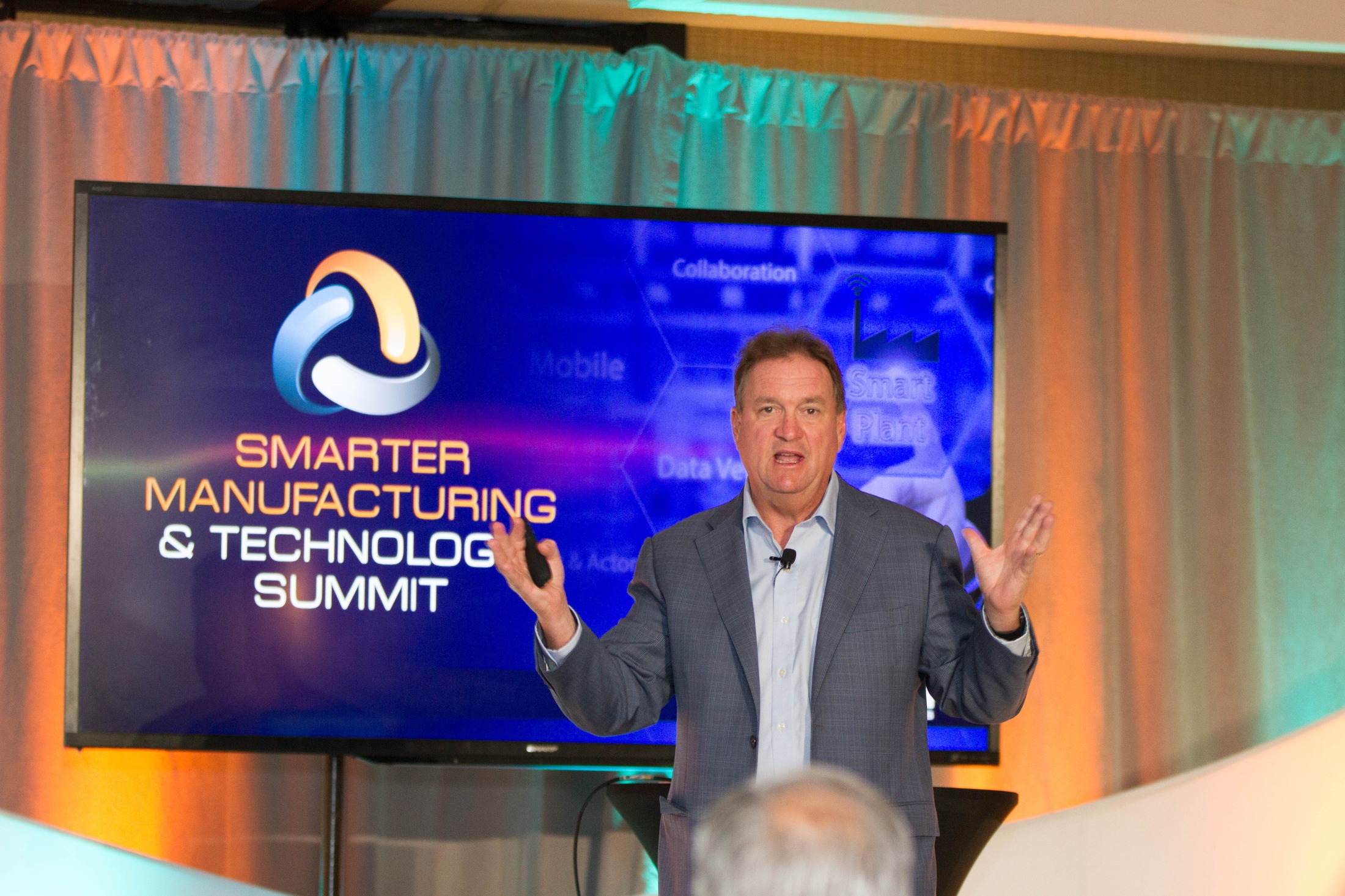
Amsted Rail
Amsted Rail
Traditional manufacturing reinvented through materials, 3D printing and connected products.
AI. Robotics. Digital twins. Mass customization. Advanced materials.
Manufacturing is moving from mass production to flexible, intelligent, software-defined systems built around AI, robotics, digital twins, advanced materials and make-to-order economics.
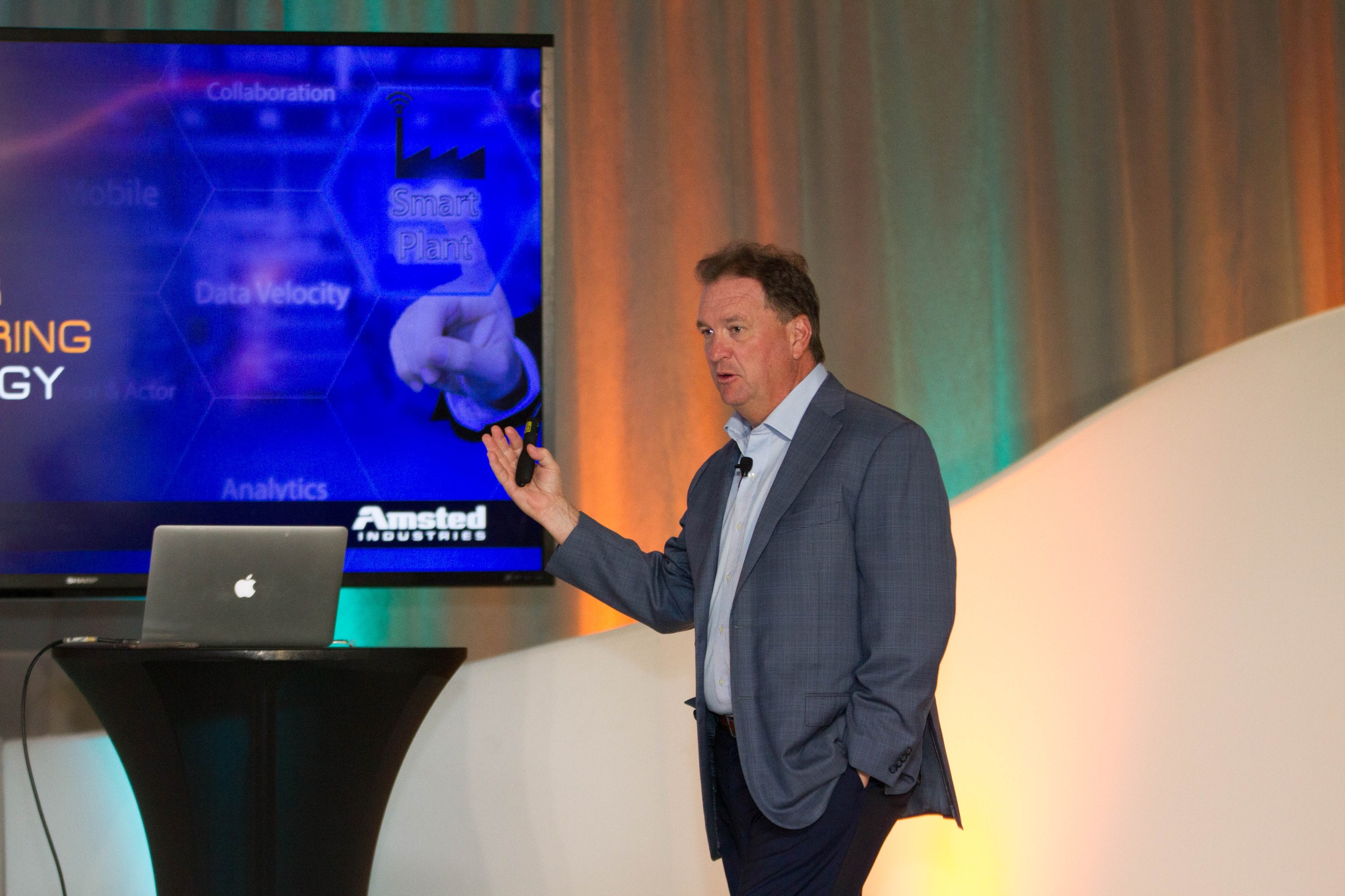
Manufacturing is moving from mass production to flexible, intelligent, software-defined systems built around AI, robotics, digital twins, advanced materials and make-to-order economics.
Pre-2006 work included DaimlerChrysler in Detroit and Stuttgart, Caterpillar, Parker Hannifin, TSMC, IBM Advanced Manufacturing, Wisconsin Manufacturing Extension Partnership, PrintPack and NAPA Auto Parts.
Collaborative commerce, China Price, channel change and design networks.
Cloud, IoT, robotics, mass customization and additive manufacturing.
Digital twins, predictive maintenance, cobots and product connectivity.
Machine vision, generative design, reshoring and smarter factories.
Agentic AI, autonomous microfactories and product-as-a-service.
Manufacturing is being rewritten by several accelerations at once. The issue is no longer whether these technologies arrive. It is how quickly they collide, scale and change the economics of what you make.
Machine vision, predictive maintenance, industrial copilots and intelligent quality systems are moving from experiment to operating reality. Intelligence is becoming another layer of the production system.
Digital twins, simulation, flexible robotics and generative design compress the distance between idea, engineering and production. More decisions happen before metal is cut.
Smaller autonomous production cells, additive manufacturing and distributed capacity challenge the old assumption that manufacturing advantage always comes from ever-larger plants.
Connectivity, software and embedded intelligence keep changing the product after shipment. The business model shifts from selling the thing to managing performance, uptime and outcomes.
A signal is not a prediction. It is evidence that an assumption might be expiring. Watch enough of them and the direction of travel becomes much harder to ignore.
Why I’m watching: digital twins are moving beyond visualization toward operating decisions.
What it might mean: the cost of testing an idea falls while the speed of redesign rises.
Watch next: simulation connected directly to AI, engineering and production systems.
Why I’m watching: robots are becoming easier to train, redeploy and combine with machine vision.
What it might mean: automation economics begin working for shorter runs and more variable work.
Watch next: humanoids, cobots and autonomous material movement moving from pilots into repeatable use.
Why I’m watching: generative tools, materials science and rapid prototyping are converging.
What it might mean: product development starts operating at software speed.
Watch next: organizations that reorganize engineering around continuous iteration rather than fixed cycles.
The technologies change. The pattern has been visible for decades: products become intelligent, factories become connected, design cycles accelerate and manufacturing moves from rigid scale toward flexible capability.
That is why the long view matters. Jim’s manufacturing work has tracked digital supply chains, Factory 2.0, mass customization, additive manufacturing, Industry 4.0, digital twins, robotics, AI industrialization and the emerging autonomous factory.
Collaborative commerce, global sourcing, digital design networks and the early restructuring of industrial value chains.
Cloud, IoT, robotics, additive manufacturing and mass customization begin changing the economics of production.
Digital twins, predictive maintenance, cobots, connected products, machine vision and AI move into the industrial mainstream.
Agentic systems, autonomous production, faster materials science and distributed manufacturing push the sector toward continuous reinvention.
These are directions, not canned speeches. Each keynote is customized around the room, strategic issues and decisions ahead.
The factory becomes intelligent, flexible and connected.
Machine vision, generative design and autonomous operations.
Simulation becomes the operating layer for industrial decisions.
From make-to-stock to make-to-order.
Connectivity, predictive diagnostics and servicification.
Transformation leadership in the era of supernova trends.
The future arrives through multiple overlapping shifts, not one technology in isolation.
Make-to-order replaces make-to-stock in more categories.
Products and factories are simulated before physical decisions are made.
Quality, design and process decisions become increasingly intelligent.
Flexible automation expands across tasks once reserved for people.
Science changes product weight, performance and economics.
Connected products shift value toward uptime, insight and service.
The strategic advantage is recognizing which assumptions have expired, building capacity to experiment, and moving fast enough to matter.
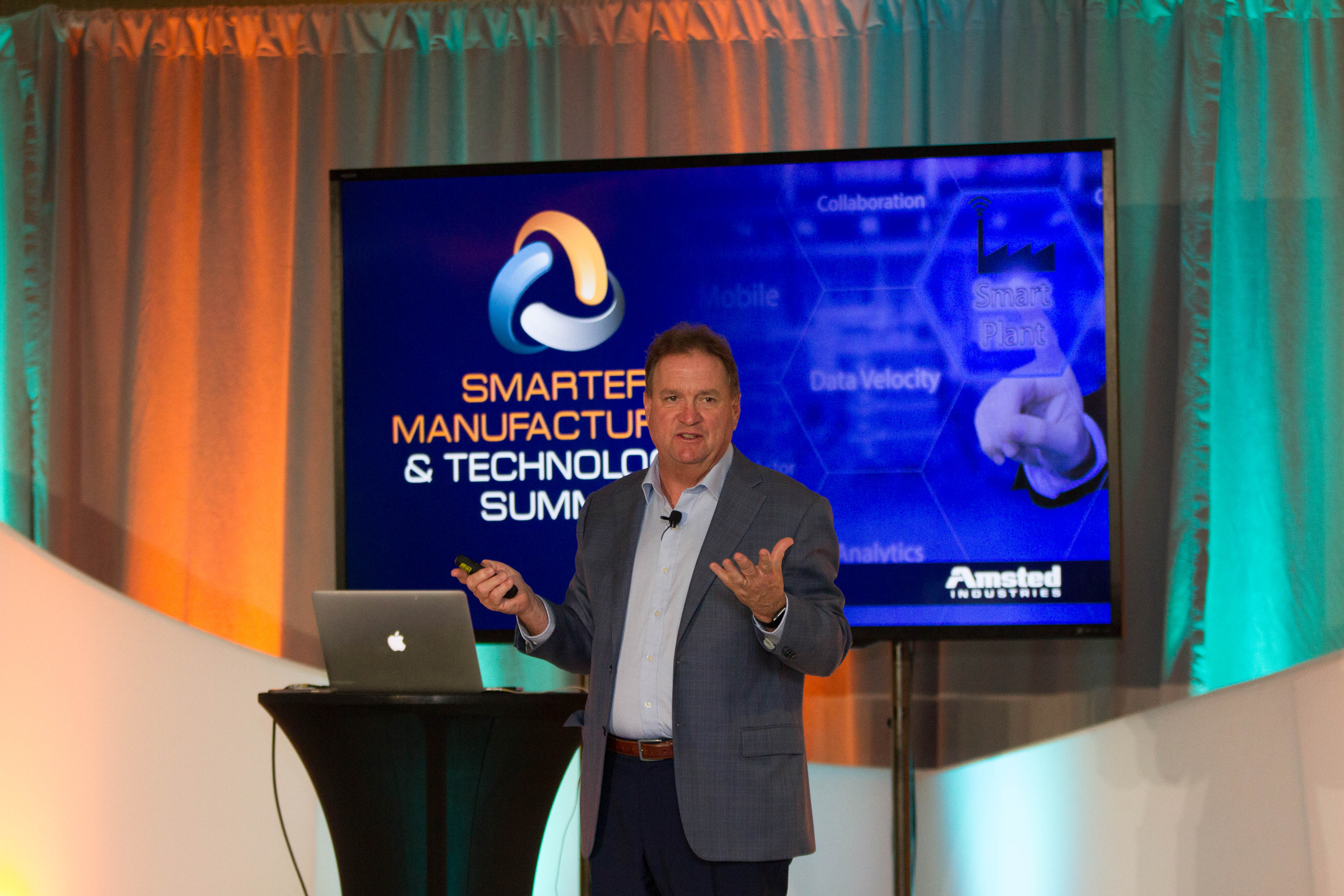
Different client. Different room. Different strategic problem.
Traditional manufacturing reinvented through materials, 3D printing and connected products.
Project Aura 2035: digital twins, bio-responsive materials and product-as-a-service.
Legrand, Schneider Electric, Whirlpool, QAD, Camstar, Swagelok and others.
Predictive maintenance, machine vision, robotics and intelligent supply chains.
Decades of work across the organizations shaping this sector.
DaimlerChrysler • Caterpillar • Parker Hannifin • TSMC • IBM Advanced Manufacturing • Amsted Rail • Schneider Electric • Legrand • Whirlpool • Swagelok • QAD • Camstar • Alignex • Metal Powder Industries Federation • Association of Manufacturing Technology • Society of Manufacturing Engineers • BIFMA • Columbus McKinnon • Assa Abloy
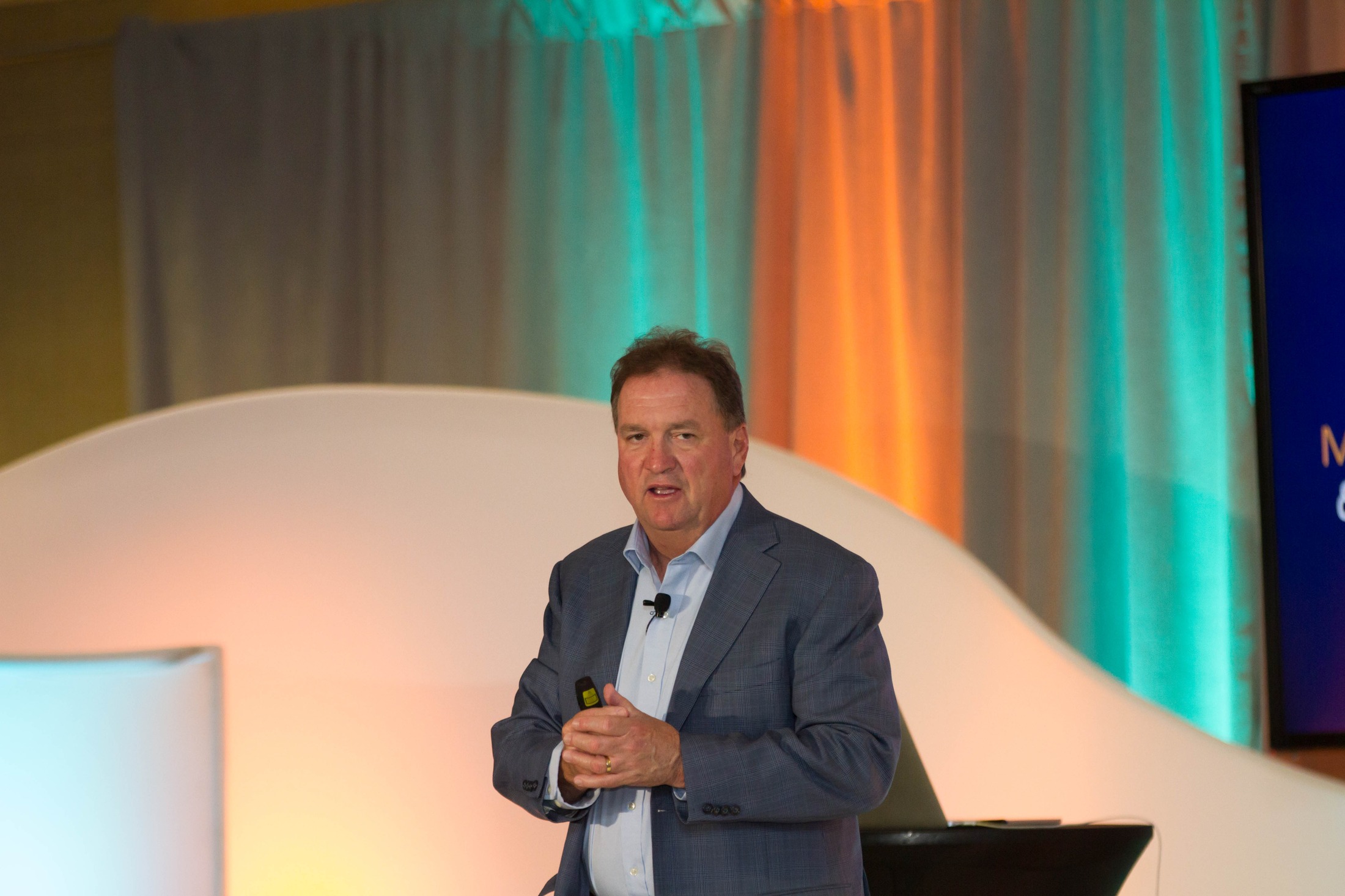
Client calls, industry research, event objectives, trend analysis and current developments are built into the keynote.
You do not need a finished brief. Tell Jim who is in the room and what is changing fastest around them.